Proverbs 20 13 Meaning
Proverbs 20 13 Meaning. (proverbs 13:20 asv) he that walketh with wise [men] becometh wise; It mocks him, makes a fool of him, promises him that satisfaction which.
The relationship between a sign along with the significance of the sign can be called"the theory of significance. In this article, we will look at the difficulties with truth-conditional theories of meaning, Grice's study of speaker-meaning, and The semantics of Truth proposed by Tarski. We will also consider the arguments that Tarski's theory of truth.
Arguments against truth-based theories of meaning
Truth-conditional theories for meaning say that meaning is a function of the elements of truth. But, this theory restricts its meaning to the phenomenon of language. Davidson's argument essentially argues that truth values are not always reliable. So, we need to be able to distinguish between truth-values and a flat statement.
The Epistemic Determination Argument is an attempt to defend truth-conditional theories of meaning. It is based on two fundamental notions: the omniscience and knowledge of nonlinguistic facts, and knowledge of the truth-condition. But Daniel Cohnitz has argued against these assumptions. This argument therefore does not hold any weight.
Another frequent concern with these theories is their implausibility of meaning. However, this worry is dealt with by the mentalist approach. In this manner, meaning is examined in words of a mental representation instead of the meaning intended. For instance it is possible for a person to get different meanings from the same word when the same person uses the same word in multiple contexts, but the meanings behind those words could be similar regardless of whether the speaker is using the same phrase in both contexts.
Though the vast majority of theories that are based on the foundation of meaning try to explain meaning in way of mental material, non-mentalist theories are sometimes pursued. This could be due skepticism of mentalist theories. They can also be pushed as a result of the belief that mental representation should be considered in terms of linguistic representation.
Another key advocate of the view The most important defender is Robert Brandom. This philosopher believes that the purpose of a statement is derived from its social context and that speech activities involving a sentence are appropriate in the situation in which they're used. Thus, he has developed the pragmatics theory to explain sentence meanings through the use of normative and social practices.
Grice's analysis of speaker-meaning
Grice's analysis of speaker-meaning puts much emphasis on the utterer's intentions and their relation to the significance for the sentence. He argues that intention is a complex mental state that must be understood in order to interpret the meaning of an expression. Yet, his analysis goes against speaker centrism by looking at U-meaning without considering M-intentions. Furthermore, Grice fails to account for the nature of M-intentions that aren't strictly limited to one or two.
In addition, Grice's model does not take into account some critical instances of intuitive communication. For example, in the photograph example that was mentioned earlier, the subject does not make clear if it was Bob or to his wife. This is a problem as Andy's photo doesn't specify the fact that Bob as well as his spouse is unfaithful , or faithful.
While Grice is right speaking-meaning is more fundamental than sentence-meanings, there is some debate to be had. In fact, the difference is essential to the naturalistic respectability of non-natural meaning. In reality, the aim of Grice is to provide an explanation that is naturalistic for this non-natural significance.
To comprehend the nature of a conversation we need to comprehend how the speaker intends to communicate, which is complex in its embedding of intentions and beliefs. However, we seldom make sophisticated inferences about mental states in simple exchanges. Therefore, Grice's model of meaning-of-the-speaker is not in accordance with the real psychological processes involved in understanding language.
While Grice's account of speaker-meaning is a plausible description in the context of speaker-meaning, it is still far from being complete. Others, like Bennett, Loar, and Schiffer, have come up with deeper explanations. These explanations may undermine the credibility in the Gricean theory since they regard communication as an intellectual activity. It is true that people believe that a speaker's words are true because they understand the speaker's intention.
It does not take into account all kinds of speech acts. The analysis of Grice fails to consider the fact that speech acts are commonly employed to explain the significance of a sentence. The result is that the concept of a word is reduced to the meaning of its speaker.
The semantic theory of Tarski's is not working. of truth
Although Tarski believes that sentences are truth-bearing But this doesn't imply that the sentence has to always be correct. He instead attempted to define what is "true" in a specific context. His theory has become an integral component of modern logic and is classified as a correspondence or deflationary.
One issue with the theory to be true is that the concept is unable to be applied to any natural language. This is because of Tarski's undefinability theory, which says that no bivalent language is able to have its own truth predicate. Although English might appear to be an in the middle of this principle but this is in no way inconsistent with Tarski's view that all natural languages are semantically closed.
But, Tarski leaves many implicit limits on his theory. For example the theory cannot contain false statements or instances of the form T. That is, theories must not be able to avoid that Liar paradox. Another issue with Tarski's idea is that it's not consistent with the work of traditional philosophers. Furthermore, it's not able explain all instances of truth in terms of ordinary sense. This is a huge problem for any theory of truth.
The other issue is the fact that Tarski's definition of truth requires the use of notions from set theory and syntax. They're not appropriate when looking at infinite languages. Henkin's approach to language is well-established, however, this does not align with Tarski's definition of truth.
Truth as defined by Tarski is also difficult to comprehend because it doesn't reflect the complexity of the truth. For instance, truth cannot serve as an axiom in the context of an interpretation theory, and Tarski's principles cannot define the meaning of primitives. Furthermore, his definitions of truth isn't in accordance with the notion of truth in definition theories.
These issues, however, will not prevent Tarski from applying this definition and it does not fall into the'satisfaction' definition. In reality, the concept of truth is more straightforward and depends on the particularities of the object language. If you want to know more about the subject, then read Thoralf Skolem's 1919 essay.
The problems with Grice's approach to sentence-meaning
The problems with Grice's analysis of meaning in sentences can be summed up in two primary points. First, the intent of the speaker must be recognized. Also, the speaker's declaration must be supported by evidence that supports the desired effect. However, these requirements aren't satisfied in all cases.
The problem can be addressed by changing the way Grice analyzes sentence meaning to consider the meaning of sentences that do not have intention. This analysis is also based on the notion which sentences are complex and contain several fundamental elements. In this way, the Gricean analysis fails to recognize other examples.
This is particularly problematic in light of Grice's distinction between meaning of the speaker and sentence. This distinction is fundamental to any naturalistically credible account of the meaning of a sentence. This theory is also crucial to the notion of implicature in conversation. It was in 1957 that Grice offered a fundamental theory on meaning, which was further developed in later research papers. The basic concept of meaning in Grice's work is to consider the speaker's motives in determining what the speaker is trying to communicate.
Another issue with Grice's method of analysis is that it fails to consider intuitive communication. For instance, in Grice's example, it's not clear what Andy uses to say that Bob is unfaithful with his wife. There are many alternatives to intuitive communication examples that are not explained by Grice's analysis.
The main premise of Grice's model is that a speaker is required to intend to cause an effect in an audience. This isn't in any way philosophically rigorous. Grice fixes the cutoff point on the basis of potential cognitive capacities of the interlocutor as well as the nature of communication.
Grice's analysis of sentence-meaning is not very plausible, although it's an interesting interpretation. Other researchers have come up with more thorough explanations of the significance, but they're less plausible. Furthermore, Grice views communication as an act of reason. The audience is able to reason by understanding what the speaker is trying to convey.
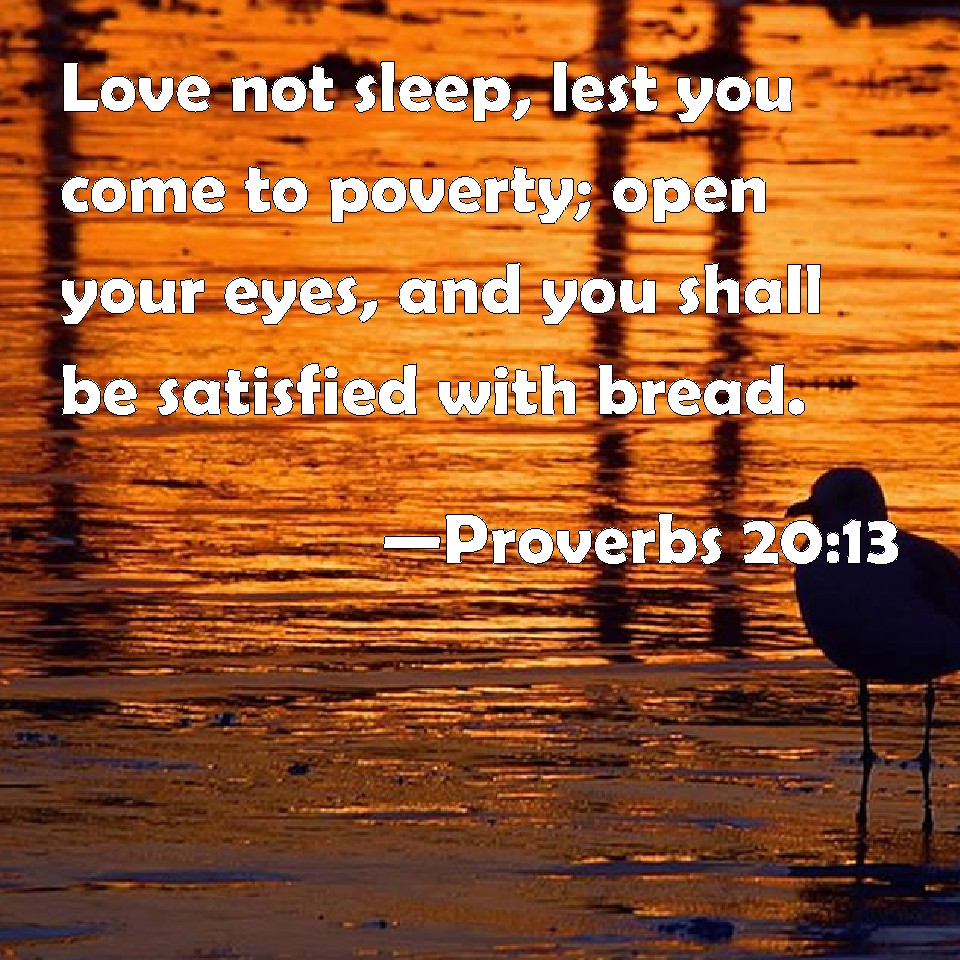
(proverbs 13:20 kjv) walk with wise men, and thou shalt be wise; Proverbs 20:14 worthless, worthless! says the buyer, but on the way out, he gloats. Do not love sleep or you will grow poor;
Proverbs 20:13 Translation & Meaning.
A brawler is violent, loud and uncontrolled. But the companion of fools shall smart for it. Proverbs 20:14 worthless, worthless! says the buyer, but on the way out, he gloats.
But How Often Is It Turned Into A Curse!It.
He that walketh with wise men shall be wise — to walk with a person implies love and attachment; All our powers and faculties are from god, and are to be. Proverb for the day 20:13 — get up!!!
It Mocks Him, Makes A Fool Of Him, Promises Him That Satisfaction Which.
And it is impossible not to imitate those we love. This is true in at least two senses. Proverbs 20:3 it is an honour for a man to cease from strife:
(Proverbs 13:20 Asv) He That Walketh With Wise [Men] Becometh Wise;
So shalt thou have a sufficiency of food for thyself. Lest thou come to poverty — lest thou. Proverbs 20:13 love not sleep, lest thou come to poverty;
11 Even A Child Is Known By His Doings, Whether His Work Be Pure,.
Stay awake and you will have food to spare. See ( exodus 4:11 ) ( psalms 94:7 psalms 94:8 ) ; No part of this publication may be reproduced or transmitted in any.

Post a Comment for "Proverbs 20 13 Meaning"